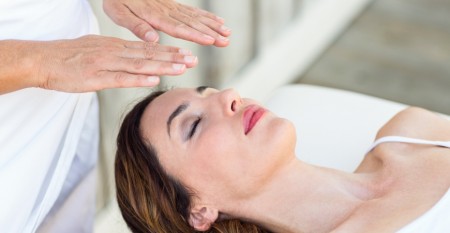
Ask a doctor about Reiki and you’ll usually get one of two answers: a polite shrug, or “there’s no evidence for that.” Ask someone who’s actually tried it, and you’ll often hear something closer to “I don’t know how it worked, but I slept better that night than I had in months.” Both reactions are understandable. Reiki sits in an odd spot — a hands-on practice that’s been around since the early 1900s, widely offered in hospitals and cancer centers now, yet still treated by mainstream medicine as unproven. So what does the research actually say?
More studies than you’d think, but small ones
There are now over 140 Reiki studies published in peer-reviewed journals. That number surprises most people, including plenty of skeptics. The catch is size: a lot of these are pilot studies with fewer than 20 people per group, and not all of them use a proper control group. That’s exactly why the medical establishment keeps calling the evidence “inconsistent” — it’s not that nothing has been found, it’s that most individual studies are too small to be conclusive on their own.
But there are exceptions. Researchers have identified around a dozen larger clinical trials with 30 or more participants per group, and a few meta-analyses that pool results across studies. Those are the ones worth paying attention to.
Where the evidence is strongest
A 2022 systematic review in Frontiers in Psychology looked specifically at whether Reiki beats a placebo for mental health symptoms. Fourteen randomized, placebo-controlled trials made the cut. The finding: Reiki showed a real effect on stress and depression, graded as high-confidence evidence by the researchers, and a moderate-to-high effect on anxiety. That’s a meaningfully stronger conclusion than “might help with relaxation.”
A separate meta-analysis pooling 661 participants across multiple randomized controlled trials found something practical: dosage matters. Longer sessions of an hour or more, done at least eight times, produced the biggest improvements in quality of life. A single 20-minute session still helped, just less dramatically. That lines up with what a lot of practitioners have said anecdotally for years — one visit is nice, but it’s the ongoing sessions that tend to compound.
What the body seems to be doing
Beyond the mood surveys, a handful of studies have measured something harder to fake: physiology. Reiki has been linked to lower resting heart rate, better heart rate variability, and reduced blood pressure compared with sham treatment and rest alone. One trial split hypertensive patients into three groups — real Reiki, a placebo version where the practitioner mimicked the hand positions without intending to direct energy, and simple rest. All three groups saw blood pressure drop somewhat, which makes sense, since lying still and relaxing helps regardless. But the Reiki group dropped the most.
Nobody has a solid explanation for why hands-on energy work would do this. That’s the honest, slightly uncomfortable part of the research. The effect shows up, repeatedly, in measurements that are hard to fake with a placebo response — but the mechanism is still a question mark. Some researchers point to the parasympathetic nervous system, the one responsible for “rest and digest” mode, getting activated by slow, non-demanding touch and quiet attention. That alone could explain a lot without needing anything mystical.
The honest caveats
None of this means Reiki cures anything, and no serious researcher claims otherwise. It hasn’t been shown to shrink tumors or fix a damaged joint. What it has shown, across enough independent trials to take seriously, is a consistent ability to calm the nervous system, ease anxiety, and support people going through something hard — chemotherapy, surgery recovery, chronic pain flare-ups. That’s also exactly why it’s increasingly offered alongside conventional care in hospitals rather than instead of it. The NIH still officially calls the evidence inconclusive, and given the sample sizes involved, that’s a fair position. Fair doesn’t mean “nothing is there.” It means more research is needed before Reiki gets treated as a proven medical treatment rather than a well-supported complementary one.
One 2017 study on breast cancer patients found something worth mentioning here too: women who received Reiki before surgery reported higher self-efficacy for coping with their diagnosis. Not a cure, not even a direct physical benefit — just a measurable difference in how capable they felt facing what came next. For a lot of people, that’s the actual appeal. It’s a low-risk, no-side-effect way to feel steadier during something difficult, backed by more research than most people realize and less certainty than marketing copy usually admits.
If you want to explore Reiki further, there are excellent books on Reiki and energy healing that cover both the research and the practice in depth. (Amazon affiliate link — we earn a small commission at no cost to you.)
Reiki Works shares clear, well-researched information about Reiki, Shamballa, and energy healing to help you make informed decisions about your wellness journey. We’re part of the CrystalWind.co family of holistic wellness resources, and you can find more energy healing articles in the Reiki section on CrystalWind.ca.
Recommended Reiki Tools
- Reiki Healing Crystals
- Tibetan Singing Bowls
- Reiki & Energy Healing Books
- Meditation Cushions & Candles
As an Amazon Associate, Reiki Works earns from qualifying purchases.
Advertisement
Your ad could be here — Advertise on Reiki Works